

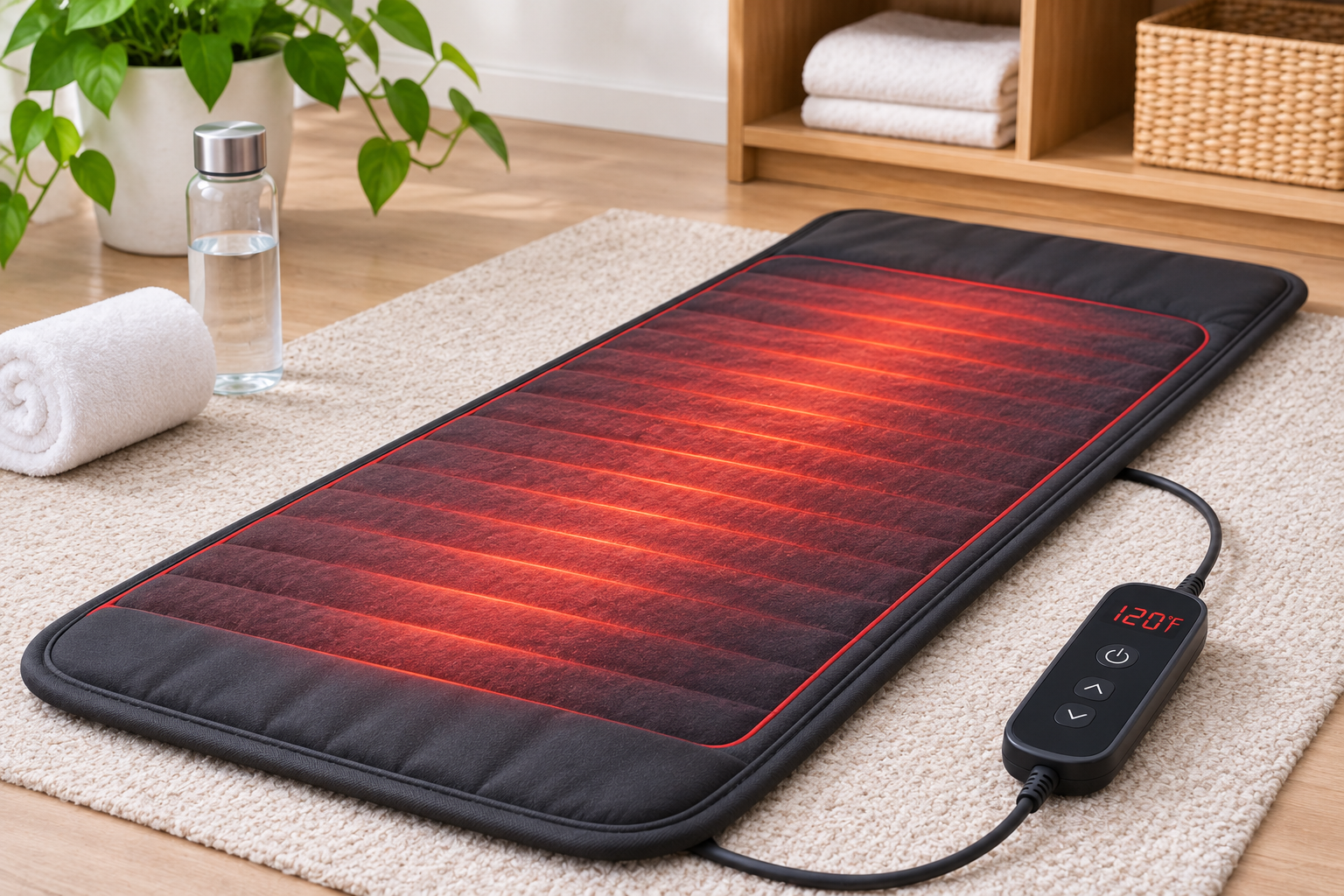
An infrared mat is a popular wellness device designed to provide soothing warmth and relaxation through infrared heat technology. These mats are commonly used at home to help relieve temporary muscle discomfort, reduce stiffness, and support relaxation.
In 2026, infrared therapy mats are available in various sizes, materials, and heating configurations. Understanding their features, potential benefits, and safety precautions can help you choose a suitable device.
What Is an Infrared Mat?
An infrared mat is a flexible heating device that emits infrared radiation, often through heating elements or ceramic materials.
Many products use far-infrared technology, which transfers heat to the body and produces a warming sensation.
Some mats also contain natural stones, such as jade or tourmaline, although claims about their additional therapeutic advantages require stronger scientific evidence.
Unlike conventional electric heating pads, infrared mats are often marketed for larger treatment areas and adjustable heating sessions.
How Does an Infrared Mat Work?
An infrared mat generates heat that warms the skin and surrounding tissues.
The warming effect may temporarily increase local blood flow, encourage relaxation, and reduce muscle stiffness.
Many models include adjustable temperature settings and automatic shutoff features.
However, infrared heating mats should not be confused with red light therapy mats, which use LEDs to deliver specific wavelengths of visible red or near-infrared light.
Benefits of Using an Infrared Mat
1. Muscle Relaxation
Gentle heat may help relax tense muscles after physical activity or extended sitting.
This makes heated infrared mats appealing for individuals seeking temporary comfort.
2. Temporary Pain Relief
Heat therapy can provide short-term relief from certain muscle aches and joint stiffness.
However, infrared mats are not proven cures for chronic pain conditions.
3. Improved Comfort and Relaxation
The warmth generated by an infrared mat can create a calming experience during rest.
Many users incorporate heating sessions into their evening wellness routines.
4. Support for Local Circulation
Heat exposure may temporarily increase blood circulation near the warmed area.
Research into additional benefits of far-infrared radiation is ongoing, and evidence for specific home-use mats remains limited.
How to Choose the Best Infrared Mat
Before purchasing an infrared mat, consider the following features:
- Size: Choose between compact pads and full-body mats.
- Temperature Control: Look for adjustable heating settings.
- Safety Features: Prioritize overheating protection and automatic shutoff.
- Materials: Select durable, comfortable, easy-to-clean surfaces.
- Certifications: Check relevant electrical safety certifications.
- Warranty: Compare return policies and customer support.
Remember that expensive materials and additional features do not automatically guarantee better therapeutic results.
How to Use an Infrared Mat Safely
Place the mat on a suitable surface and follow the manufacturer’s instructions.
Begin with a low temperature and avoid prolonged exposure.
Do not fall asleep while using a heated mat unless its instructions explicitly permit unattended use.
People with reduced skin sensation, diabetes-related neuropathy, circulation problems, or certain medical conditions should consult a healthcare professional before use.
Stop immediately if overheating, burning, or persistent skin redness occurs.
Does an Infrared Mat Help With Weight Loss?
Some manufacturers advertise infrared mats for detoxification and fat reduction.
However, convincing clinical evidence does not demonstrate that using an infrared mat produces meaningful, lasting fat loss.
Sweating may temporarily reduce water weight, but it does not directly remove significant amounts of body fat.
Final Thoughts
An infrared mat can be a convenient addition to a home relaxation routine.
Its main potential advantages include soothing warmth, temporary muscle comfort, and relaxation.
For the best experience, choose a reliable device with appropriate safety features and realistic health claims.
