

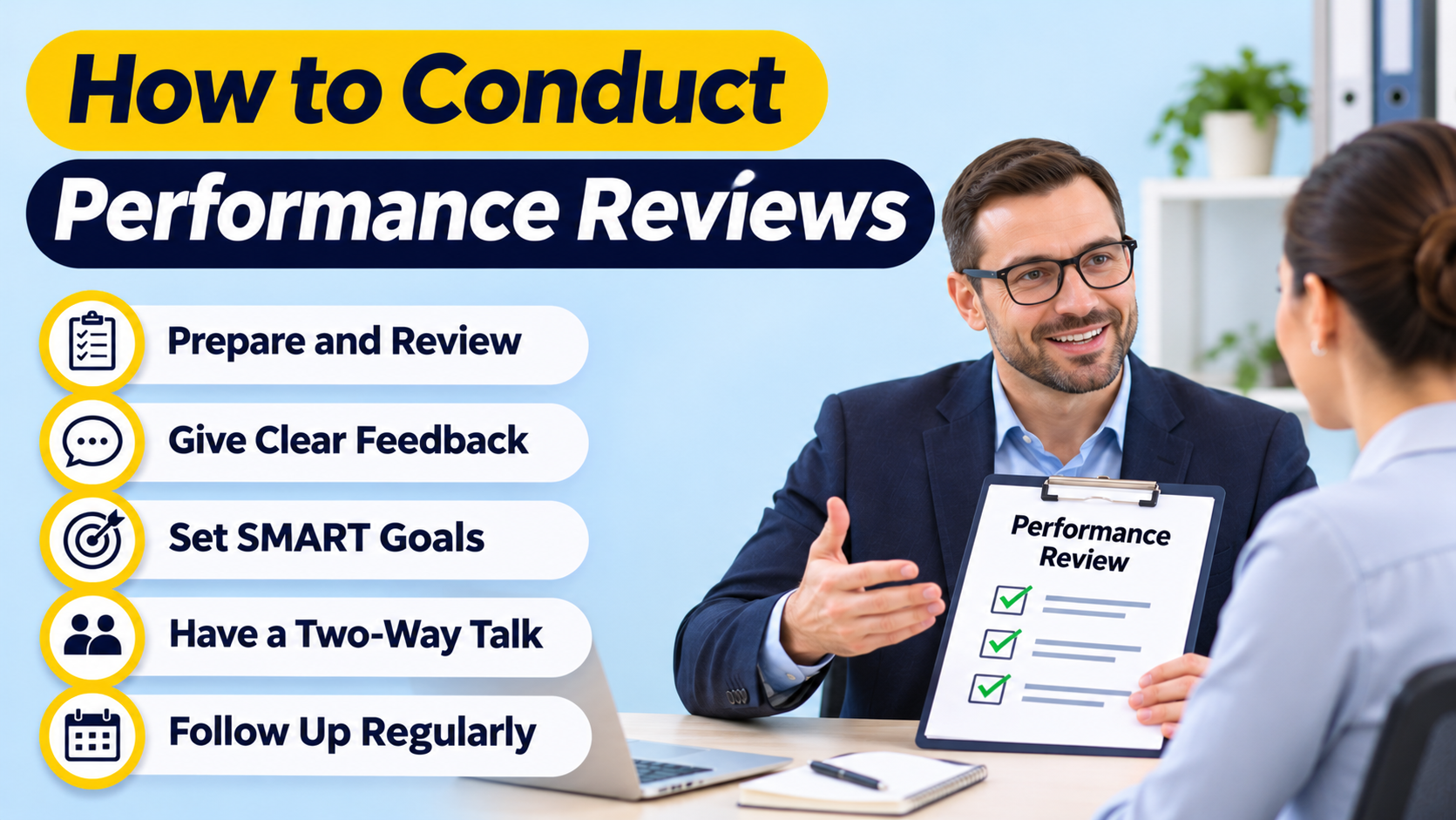
Knowing how to conduct performance reviews is essential for managers who want to improve employee productivity, communication, and professional development. An effective performance review helps employees understand their strengths, identify areas for improvement, and set achievable goals. However, poorly managed evaluations can create confusion and frustration. Following a structured approach makes performance discussions more productive, fair, and beneficial for everyone.
What Is an Employee Performance Review?
A performance review is a formal discussion between a manager and an employee about job performance, achievements, challenges, and future expectations.
Organizations conduct these evaluations annually, quarterly, or at other scheduled intervals.
The primary purpose is to recognize accomplishments, provide constructive feedback, and support employee development.
1. Prepare Before the Performance Review
Preparation is the foundation of an effective evaluation.
Review the employee’s job responsibilities, previous goals, completed projects, and performance records.
Gather specific examples of achievements and improvement opportunities.
Encourage employees to complete a self-assessment before the meeting so they can share their perspectives.
2. Set Clear Performance Criteria
Evaluate employees using measurable standards related to their responsibilities.
Consider productivity, work quality, communication, teamwork, and goal completion.
Avoid subjective judgments or personal preferences that could affect fairness.
Consistent evaluation criteria help employees understand how their performance is measured.
3. Create a Comfortable Meeting Environment
Schedule the review in a private, distraction-free setting.
Explain the meeting’s purpose and encourage open communication.
Start with a positive tone by recognizing the employee’s contributions.
A respectful atmosphere makes it easier to discuss both achievements and challenges.
4. Provide Specific and Constructive Feedback
Effective feedback focuses on observable behavior rather than personality.
Instead of saying, “You need better communication skills,” explain a specific situation and its impact.
Highlight successful work while identifying areas that require improvement.
Keep feedback clear, respectful, and actionable.
5. Encourage Two-Way Communication
Performance evaluations should involve discussion rather than one-sided criticism.
Ask employees about their experiences, challenges, and career goals.
Useful questions include:
- What achievements are you most proud of?
- What challenges affected your performance?
- What support would help you improve?
- Which skills would you like to develop?
Listening carefully helps managers understand workplace concerns and identify opportunities for improvement.
6. Establish SMART Performance Goals
After discussing performance, establish clear objectives for the next review period.
SMART goals should be Specific, Measurable, Achievable, Relevant, and Time-bound.
For example, a customer service employee might aim to improve customer satisfaction scores by 10% within six months.
Clear goals provide direction and make future evaluations easier.
7. Document the Performance Review
Record the main discussion points, employee achievements, development needs, and agreed-upon goals.
Documentation helps maintain consistency and accountability.
Share the review summary with the employee and allow them to provide comments or clarification.
Store performance records securely according to company policies.
8. Follow Up Regularly
A successful performance review should lead to continuous improvement.
Schedule regular check-ins to discuss progress, provide support, and address emerging challenges.
Recognize improvements and adjust goals when business priorities change.
Ongoing communication makes performance management more effective than relying exclusively on annual evaluations.
Common Performance Review Mistakes to Avoid
Managers should avoid vague feedback, personal bias, unexpected criticism, and unrealistic expectations.
Failing to recognize achievements can also reduce employee motivation.
Always focus on evidence, balanced communication, and practical development opportunities.
Final Thoughts
Understanding how to conduct performance reviews helps managers build stronger teams and encourage professional growth.
Preparation, constructive feedback, measurable goals, and regular follow-ups are essential for successful evaluations.
When conducted fairly and consistently, performance reviews improve communication, clarify expectations, and support long-term organizational success.
