

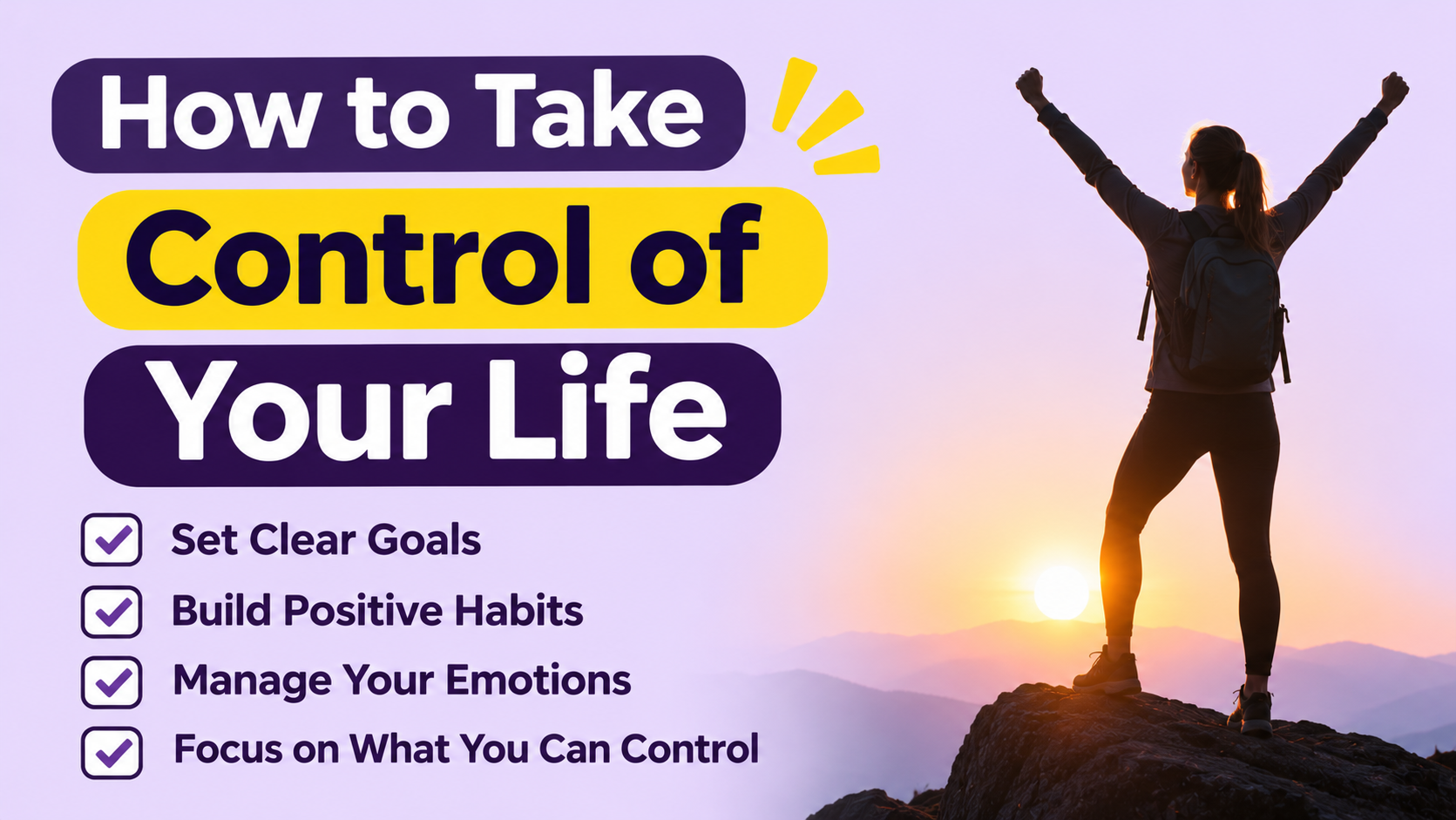
Feeling stuck, overwhelmed, or uncertain about your future can be frustrating. Learning how to take control of your life begins with understanding your priorities and making intentional decisions. You cannot control every situation, but you can influence your habits, responses, and personal goals. Small daily changes can help you develop confidence, improve your mindset, and create a more meaningful life.
1. Take Responsibility for Your Decisions
Taking responsibility is an important step toward personal growth.
Instead of blaming circumstances or other people for every difficulty, focus on what you can change.
Accepting responsibility does not mean everything is your fault. It means recognizing your ability to make decisions that influence your future.
When you acknowledge mistakes and learn from them, you become better prepared for future challenges.
2. Set Clear and Achievable Goals
Without clear goals, everyday activities can feel directionless.
Identify what matters most in your life, whether it involves career development, education, relationships, or personal health.
Break larger goals into smaller, manageable steps.
For example, if you want financial independence, begin by tracking expenses and creating a realistic savings plan.
Setting achievable goals provides direction and makes progress easier to measure.
3. Build Positive Daily Habits
Your everyday habits influence your productivity, emotional well-being, and long-term success.
Start with simple routines such as waking up consistently, exercising regularly, and organizing daily responsibilities.
Avoid trying to change everything overnight.
Small improvements become more sustainable when repeated consistently.
Building positive habits helps you feel more organized and confident about managing your time.
4. Learn to Manage Your Emotions
Emotional awareness plays an important role in taking control of your life.
Stress, anger, and disappointment are normal experiences, but reacting impulsively can create unnecessary problems.
Practice pausing before responding during difficult conversations.
Activities such as journaling, deep breathing, and spending time outdoors may help you manage everyday stress.
Understanding your emotions allows you to make thoughtful decisions instead of acting only on temporary feelings.
5. Stop Comparing Yourself to Others
Constant comparison can reduce confidence and create unrealistic expectations.
Social media often highlights achievements without showing the challenges behind them.
Remember that everyone follows a different path.
Focus on your progress instead of measuring success against someone else’s lifestyle.
Celebrate personal improvements, even when they appear small.
6. Set Healthy Personal Boundaries
Learning to say no is essential for protecting your time and energy.
You do not need to accept every request or constantly seek approval from others.
Healthy boundaries help maintain respectful relationships while allowing space for personal priorities.
Communicate your limits clearly and respectfully.
Protecting your time gives you more opportunities to focus on activities that support your goals.
7. Focus on What You Can Control
Unexpected events, other people’s opinions, and changing circumstances are not always within your control.
However, your choices, preparation, and responses often are.
Concentrate your energy on practical actions rather than worrying constantly about uncertain outcomes.
When challenges arise, identify one useful step you can take immediately.
Learning how to take control of your life is an ongoing process, not a single achievement. By developing healthy habits, setting realistic goals, and making thoughtful decisions, you can gradually build a more balanced and fulfilling future.
