

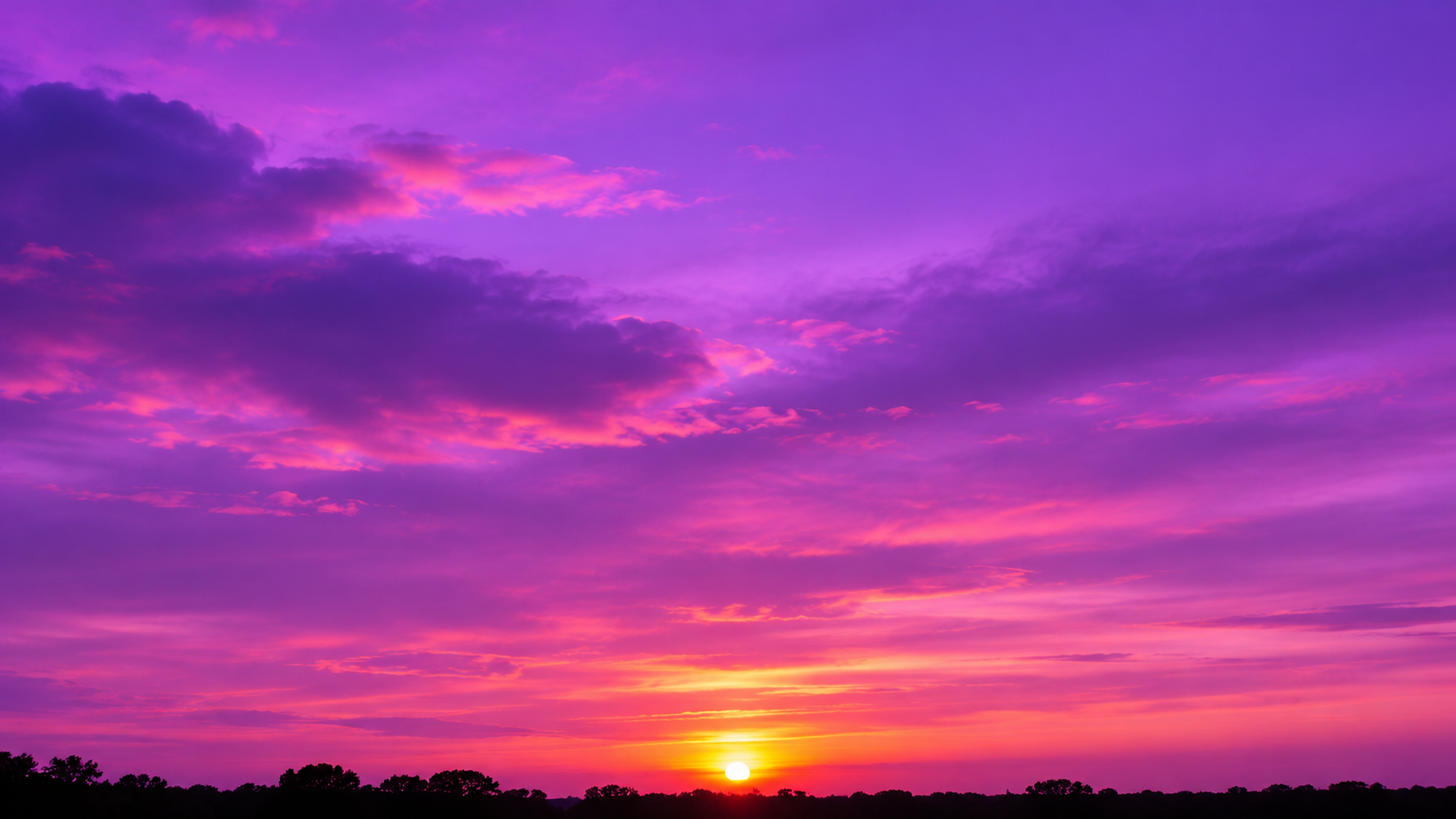
Is the sky purple? Yes, the sky can appear purple under certain atmospheric and lighting conditions. Although we normally see a blue sky during the day, spectacular purple shades sometimes appear during sunrise, sunset, or unusual weather.
These colors result from sunlight interacting with Earth’s atmosphere. Understanding how light scattering works explains why the sky can transform from blue into beautiful shades of violet, pink, and purple.
Why Is the Sky Usually Blue Instead of Purple?
Sunlight contains different colors, including red, orange, yellow, green, blue, and violet.
When sunlight enters Earth’s atmosphere, tiny gas molecules scatter shorter wavelengths more effectively than longer wavelengths.
This process is called Rayleigh scattering.
Blue and violet light scatter strongly, but human eyes are more sensitive to blue wavelengths.
Additionally, sunlight contains less violet light than blue light.
Consequently, the daytime sky usually appears blue rather than purple.
Why Does the Sky Turn Purple at Sunset?
Purple skies are particularly noticeable during sunrise and sunset.
When the Sun approaches the horizon, sunlight travels through a longer section of Earth’s atmosphere.
Much of the shorter-wavelength light gets scattered away from the direct sunlight, leaving stronger orange and red colors.
Meanwhile, scattered blue light can remain visible in other parts of the sky.
The combination of reddish illumination and bluish light can create beautiful purple-looking shades.
Clouds and atmospheric particles may enhance these dramatic colors.
Does a Purple Sky Mean a Storm Is Coming?
A purple sky does not automatically mean severe weather is approaching.
During thunderstorms, thick clouds, changing sunlight, and atmospheric particles can produce unusual colors.
Sometimes, clouds illuminated by low-angle sunlight appear pink or purple against darker surroundings.
However, sky color alone cannot reliably predict dangerous weather.
People should follow official weather forecasts and warnings rather than interpreting purple clouds as definite signs of a storm.
Why Is the Sky Purple at Night?
Purple skies sometimes appear after sunset, particularly near cities.
Artificial lights from buildings, streetlights, and illuminated facilities can reflect or scatter through clouds and atmospheric particles.
This phenomenon is associated with light pollution.
Certain combinations of artificial lighting and low clouds may produce pinkish or purple glows.
Natural atmospheric events, including auroras, can also create purple or violet colors in the night sky.
Is the Sky Actually Violet?
Violet and purple are related but scientifically different colors.
Violet corresponds to a specific range of visible light wavelengths.
Purple, however, is generally perceived when the human visual system combines light from different parts of the visible spectrum, particularly reddish and bluish light.
Although violet light scatters strongly in the atmosphere, our eyes generally perceive the clear daytime sky as blue.
Can Cameras Make the Sky Look More Purple?
Yes. Smartphone cameras can sometimes capture more saturated purple skies than people observe directly.
Camera settings, white balance, exposure, and photo editing influence how atmospheric colors appear.
Therefore, an intensely purple sky in a photograph may reflect both genuine lighting conditions and image processing.
Final Thoughts
So, is the sky purple? The sky is usually blue, but it can genuinely appear purple during certain sunsets, sunrises, and atmospheric conditions.
Light scattering, clouds, artificial lighting, and human color perception all influence its appearance.
Understanding these natural processes makes the changing colors of the sky even more fascinating.
